CUTICLE
Overlapping scales regulate friction and protect the interior.
 HOUSE OF AMAYAH™CROWN THEORY
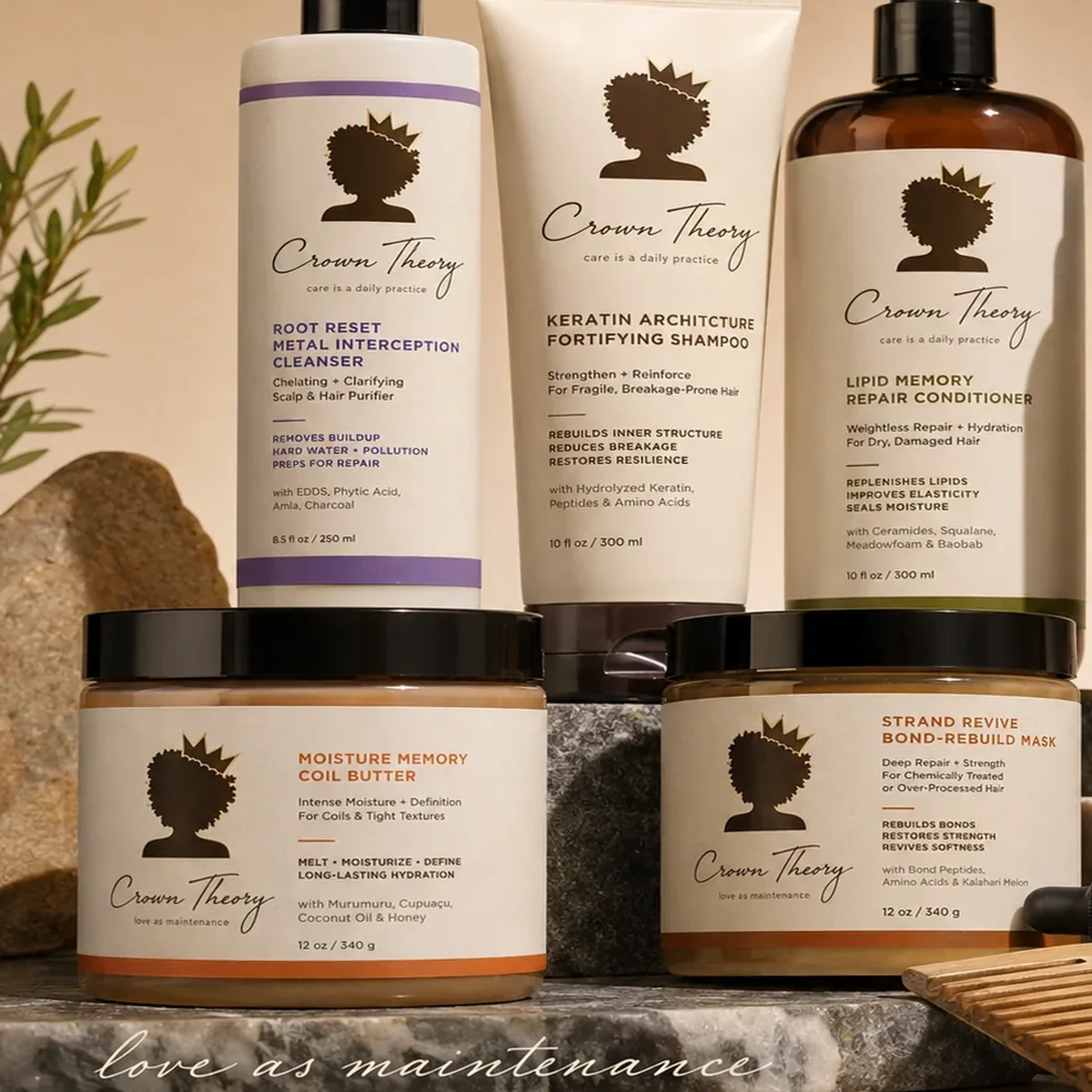
Hair keeps a history. Understanding the mechanism is one way of paying attention to it.
Select a mechanism to see what changes, what to notice, and why care may need to change with it.
High heat can increase water loss, roughen the cuticle, alter keratin organization and increase fracture risk. Damp hair under excessive heat can be especially vulnerable.
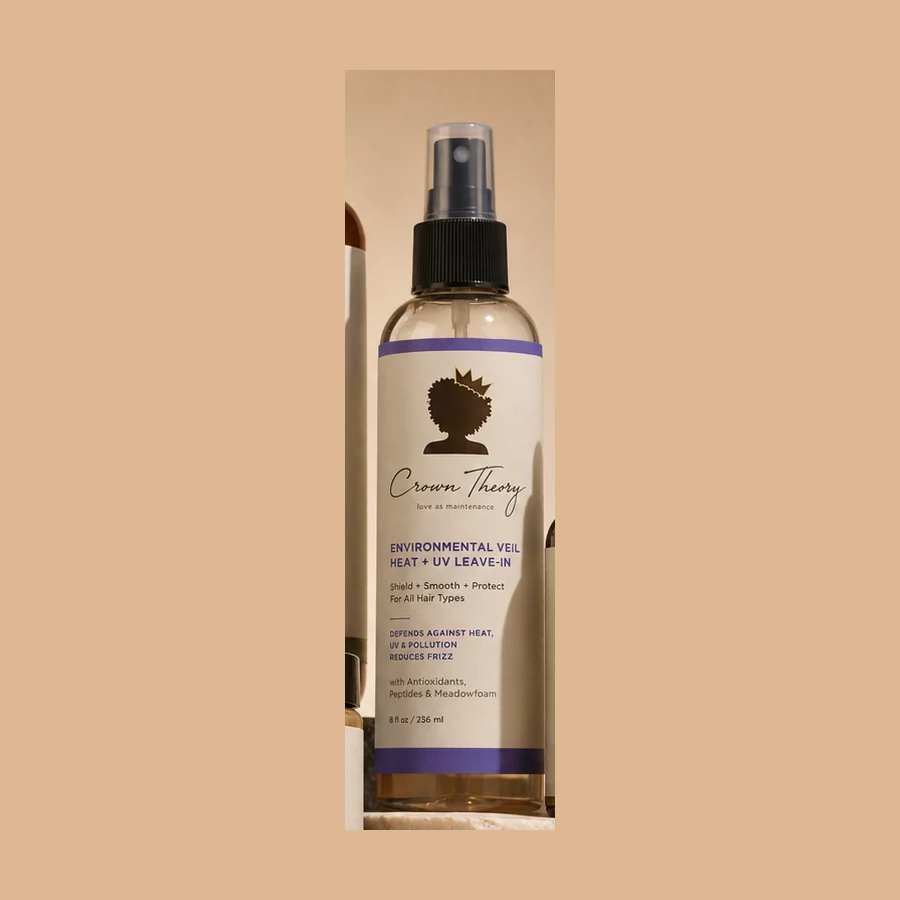
The shaft is nonliving keratin. That matters. Cosmetic care can reinforce, condition, lubricate, reduce friction, manage water, deposit protective films and limit additional insult. It cannot make a dead fiber biologically regenerate.
Overlapping scales regulate friction and protect the interior.
The 18-MEA-rich interface contributes to hydrophobicity and lower friction.
Keratin-rich structure carries much of the fiber's mechanical load.
Chemical processing can alter sulfur chemistry and structural integrity.
Braids, extensions, detangling and repeated contact create different forms of mechanical stress. The answer is not to judge the style. It is to understand load, friction, duration, access and recovery.
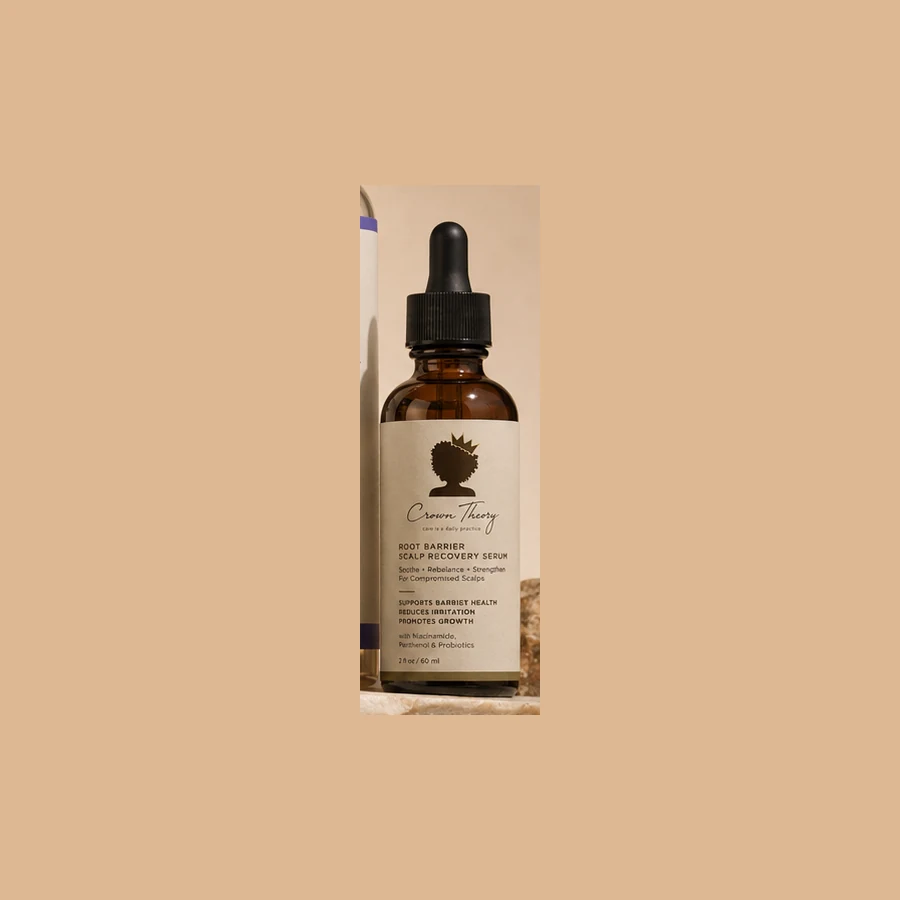
Unlike the shaft, the scalp has a living barrier with hydration, lipids, inflammation pathways and transepidermal water loss. Scalp care needs its own evidence, language and respect for what the body is telling you.
Studied in topical barrier and hydration contexts.
Associated with epidermal lipid synthesis in skin research.
Part of the lipid architecture relevant to barrier function.
We separate a useful idea from evidence about a finished product. The test has to answer the question people actually live with.
A published mechanism can tell us what to look at next. It does not automatically prove what a finished product will do.
READ THE SOURCES ↗